Helena de Kay, The Met, New York
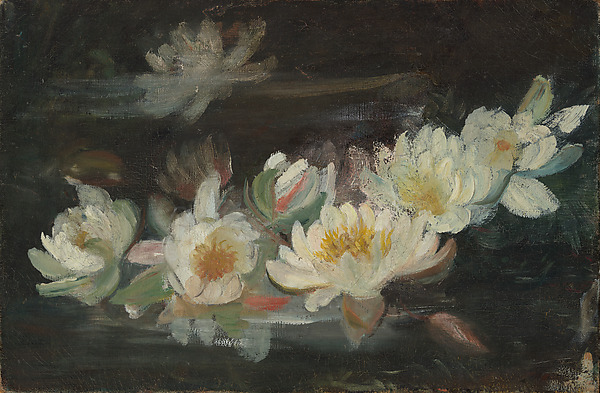
Here is Water Lilies, by Helena de Kay. It hangs at the Met, in the American Wing, and the label reads two thousand twenty four point seventy three.
A word before you look. This piece has only recently come into the collection, so you may find it in a spot that feels quiet or unexpected, tucked among other American works rather than given a room of its own. Take a moment to find it.
What it shows, plainly, is water lilies, painted by an American artist working in the eighteen seventies.
Step close first. Look at how the paint sits on the surface, whether it is thick or thin, whether you can see the marks of the brush or the hand that made them. Then step back. See how the flowers and the water resolve, or refuse to resolve, into a single scene from a distance. Notice what she chose to leave loose and what she chose to finish.
Here is what most people miss standing in front of a painting like this. Helena de Kay was part of a circle of American artists and writers working right after the Civil War, a generation trying to figure out what American art could be, separate from Europe, and often overlooked next to the men they worked beside. A painting like this one is a small piece of that argument, made in oil rather than words.
I do not know the exact size of this canvas, or whether she painted it from a pond she knew, or what became of it before it reached this room. So take your time instead with what is in front of you. Look for where the water goes dark and where it catches light. Look for a single lily that seems most finished, and one that seems barely there. Painters often leave that contrast on purpose, so let your eye choose between them and see what it decides the painting is really about.
A free guide from the Universal Gallery. Read it aloud in your own language on the tool.
Open it in the Universal Gallery →